Why Protests Alone Don’t Create Lasting Change
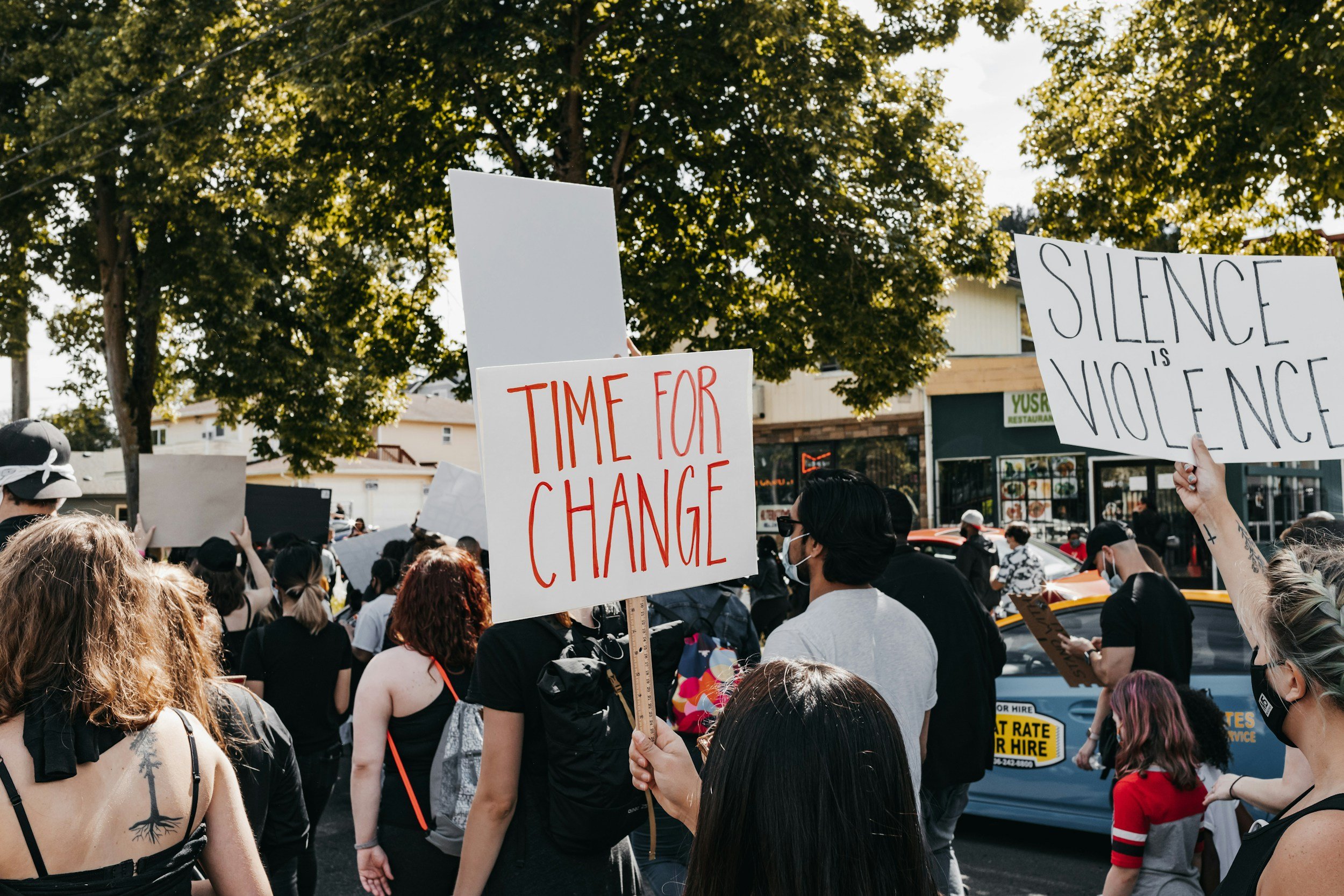
No amount of protest or pushback will manifest in real, radical change without building critical relationships.
No amount of marching or rallies will make a permanent, long-lasting impact without developing a shared understanding of how power works and moves.
No amount of large-scale pressure will result in sustainable policy change without expanding our capacity for first taking small actions where we are.
Over the past few weeks, I’ve been thinking a lot about how societal change happens. This has looked like reading articles about revolutions in other countries, the ways individual action impacts collective movements, and digging deeper into the profound works of one of my heroes, Grace Lee Boggs.
And one of the uncomfortable themes that has emerged again and again is this:
It is not enough to simply go to (and wait for) protests and marches.
The truth is: governments and their many pillars of support know how to outlast rallies and marches and demonstrations – they’ve had decades of practice.
Which raises the obvious next question: what actually works? A question, not of participation, but of effectiveness.
(Note: to be effective does not mean something must be large-scale or solve the entire problem. It simply means a tactic that works to move us toward achieving a specific goal.)
To that end, I want to share with you the words and invitations of an activist writer who goes by the name Lady Libertie on Substack:
If marching is not the strategy, what is? Unsexy things. Slow things. Relational things. Structural things.
For individuals:
stop oversharing online and start building trust offline
learn how systems you rely on actually work
notice how you are exploited to support the ruling class, and start blocking that
make yourself harder to pressure, fire, silence, or isolate
withdraw voluntary compliance wherever it is safe and strategic
For groups:
organize inside workplaces, not just outside buildings
build mutual aid that replaces dependence, not supplements it
coordinate economic pressure deliberately, not symbolically
create redundancy so no single leader or platform can be taken out
This is not glamorous work. It does not trend. It does not photograph well. You probably won’t go home feeling like you had a great day in the sun with your friends.
The point is not to make you feel good. The point is to be effective.
This can feel like a lot – I get it.
You might be reading this while toggling between work emails and doomscrolling. Or maybe you’ve been to three marches this past year and have also felt this weird mixture of energy and futility.
And on top of that, we’ve been taught for the past fifty years that mass protests are the primary tool to create social change – thinking beyond them requires creativity when just existing right now can feel exhausting.
But things have changed in America and fascism is here – and our tactics, tools, and mindsets have to change as well.
So to (hopefully) make this more accessible, I’ll return to some tangible examples of what each of us can do, using the words I first began with:
Build critical relationships: make a habit of inviting friends over to talk about how everyone is feeling right now; ask friends and neighbors what they think of local and national issues; practice seeing people around you with soft eyes; create knit-and-chat or book club groups where politics is on the conversational table; invite coworkers together to discuss and name the realities of our political context; attend or organize local gatherings (neighborhood events, apartment-get-togethers, after-work happy hours) and lean into getting to know the people around you; organize childcare swaps with other parents and families.
Develop a shared understanding of how power works and moves: invite friends to learn with you about pillars of support specific to the issues you care about; take seriously the question of “what can we do” and spend time creatively brainstorming; invite others to get creative with you; research how local budgets work or how policies get developed and talk with others about alternative futures you’d like to see made possible.
Take small actions to build capacity: invite friends to join you in taking action (even if it’s something small like writing gratitude letters to teachers!); volunteer with local mutual aid or community support organizations; participate in boycotts and invite others to join you; talk with coworkers about sharing salary information to address pay inequity; support local strikes or labor actions by bringing coffee, making phone calls, or spreading the word; join activist groups and advocate for local change-making.
Protests are important, but – to quote Lady Libertie again – they will not save us.
It is our day-to-day actions, the quality of our connectedness, and the creativity we embody that will support us in not just resisting fascism, but building a more democratic, humanity-stretching, and life-affirming future.
So my invitation for you:
Pick one thing from the above lists (or come up with your own.) Not three, not all of them – just one. And move toward making it real in the week ahead.
The most dangerous thing we can do right now is nothing, and the second most dangerous thing is trying to do everything, everywhere, all at once.
"Nobody feels qualified. Nobody feels ready. But activism isn't about who you are, it's about what you do. And what you do can be something small, but something small is something real and small is still movement." —David Gate
