Walking our Neighborhoods: A Practice of Community-Orienting in Tacoma
Back in July, I wrote about the practice of "community-orienting" – the act of physically exploring and learning about your community.
I wrote:
Whether you've lived somewhere for six months or twenty years, it's surprisingly easy to fall into familiar routines. Many of us visit the same restaurants, walk the same parks, drive the same roads, and rarely discover the people, stories, and organizations that make our communities what they are.
Despite moving from Seattle to Tacoma eight years ago, I still struggle to name all the different neighborhoods, understand how political power flows here, and – this is a constant conversation with my partner – hear about fun events in the area before they happen!
My biggest obstacle to learning more about my city?
I get comfortable in what I know and where I go.
Well, this past weekend I got uncomfortable.
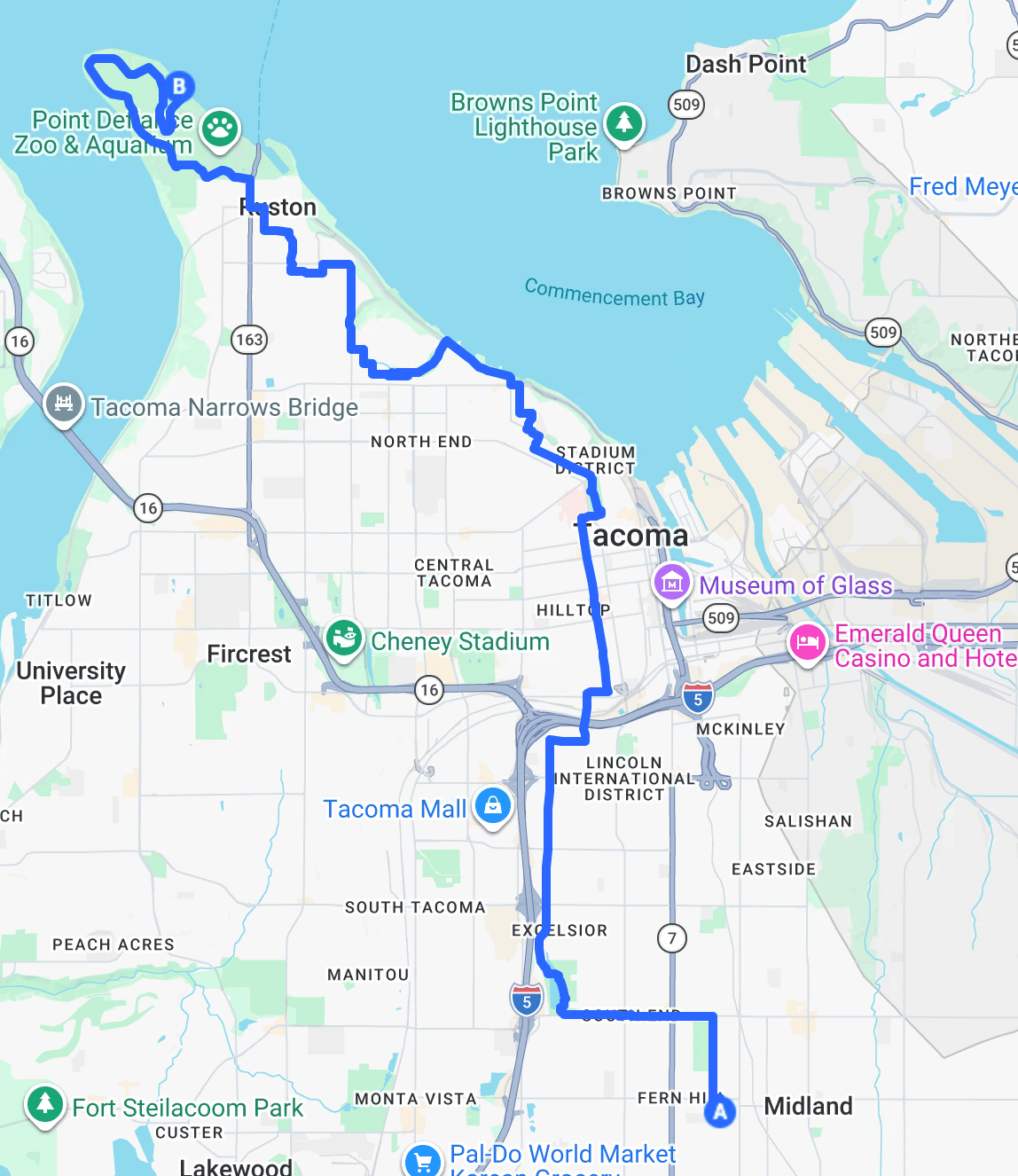
My walking path for the day!
Walking out of my doors at 7AM, I began an 18.4 mile journey from one corner of Tacoma to the opposite: from my house in the southeast to Point Defiance in the northwest.
I didn't have a major goal; I just wanted to see how my City changes from one neighborhood to the next.
In general, my South End has less sidewalks, houses with smaller yards, and far fewer retail stores than the North End. It is built around main arterials: big roads filled with big cars, moving out of the area. The coffee shops and quirky little boutiques are few and far between, unlike the North End where they appear in quick succession.
And every single neighborhood street has folks who clearly care deeply for their homes.
Regardless of if it was Fern Hill, Excelsior, or Lincoln, as I walked I saw garden gnomes and beautification projects on nearly every street. There were yards with freshly cut grass and well-planned pollinator gardens, apartment windows with herbs growing and political signs. I passed about twenty folks out walking, happy to say hello – and not one of them on their phones.
And the green spaces in the South End, just back from the arterials, are glorious: Blueberry Park where folks from the surrounding area come each year to harvest free blueberries in their tupperware and Wapato Park, where I got to see all kinds of squirrels, ducks, and geese enjoying their 8AM breakfast. (And two coyotes on a walk as well!)
I've lived on this side of town for four years and this felt like one of my first times really feeling the life it.
And of course I loved entering the North End, as well.
Crossing the freeway, I immediately met a young family walking to a park together. I stopped at two coffee shops and meandered along the waterfront. My friend James Pearson joined me for about five miles. With my feet hurting and my legs slowing down, I ended my hike at one of the most beautiful places the PNW has to offer: Point Defiance Park.
(You can watch a short video I made of my journey on Instagram here.)
All this to say: community-orienting is a powerful practice, no matter how you do it.
This past weekend, I chose to walk a bunch of neighborhoods throughout my City – but I invite you to start where you live! And instead of moving for 20 miles, try just 20 minutes!
You can engage with community-orienting by:
Walking your neighborhood and noticing what's there
Visiting local businesses and community hubs
Gardening outside and say hello to passersby
Driving through your side of town
Attending community meetings
Hosting a block party
Caring deeply for our neighborhoods and our neighbors invites us to first opt into the lives of our neighborhoods and neighbors. The way we do that can – and should – look different for each of us. 🙂
📬 Share this with your people:
