How to Avoid Activism Burnout: The Support–Stretch Matrix for Sustainable Change
If you feel overwhelmed, exhausted, or unsure how to stay engaged long-term, you’re not alone. Many forms of activism push us into burnout by demanding too much from us as individuals – and without enough support. Instead, it’s important we understand the Support–Stretch Matrix and how we can use it to find a more sustainable, life-giving way to shape change.
Back in 2015, I spent most of my September and October Saturdays walking up and down the Central District streets of Seattle door-knocking as part of an electoral campaign.
It was stressful, anxiety-producing, and – for me, in that season of life – exhilarating.
I loved the hustle and bustle of it, the clear purpose, and the sense of camaraderie with other folks on the campaign. And in comparison to our phone banking sessions, which were filled with noise and chaotic energy, door-knocking was outside, slow, relational work. Every house or apartment was a roll of the die: would this door be slammed in my face or would it open a conversation I would have in no other context?
But – again – it was also extremely anxiety-producing.
Most mornings I woke up and didn’t want to go. The sheer amount of extrovert energy I had to embody was difficult to muster. And even with the exhilaration I experienced talking about the importance of voting or updating our online voter tracking system (“is this house favorable, neutral, or unfavorable?”), I’d leave most 3-hour shifts absolutely wasted of energy.
So how did I keep going?
The Support-Stretch Matrix
The campaign offered me enough support to make it feel doable and the activity itself stretched my nervous system just enough to lead to a sense of fulfillment, growth, and purpose.
Today, I’d draw it like this:
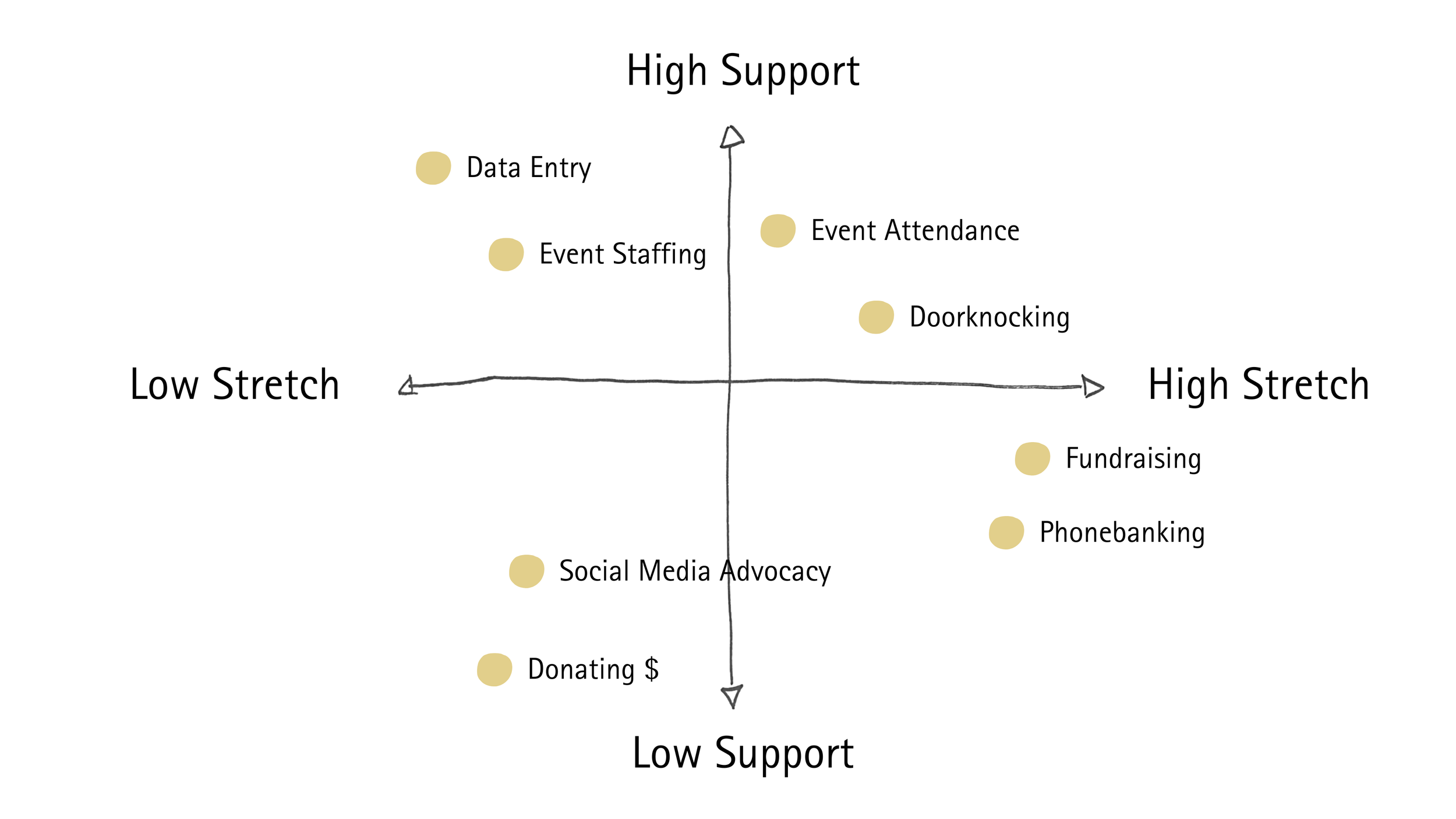
Meeting at the park each morning with a group of others and getting trained in door-knocking best practices helped me feel supported; and for who I was at the time, walking, talking, and knocking on doors was the right amount of stretch for me.
On the other hand, I hated phonebanking: I felt significantly less support and the stretch of talking with people without seeing their face or body language was way too much for me. (And to be honest, I also hated asking for donations…and it showed.)
Each of us have actions that don’t meet us where we are – that don’t come with enough support or that stretch our nervous systems way too far (or not enough.)
But that also means:
Each of us have actions that meet us with just the right amount of support and stretch.
These types of actions challenge us without overwhelming us; push us to try new things and experience growth without shutting down; and provide us with the community, training, time boundaries, and other forms of support needed for us to stick with it.
When we take actions that stretch us too far without enough support, we tend to burn out or avoid taking action altogether. But when support and stretch are aligned with who we are in a particular season of life, we build our capacity for showing up more and more.
How to Use the Support-Stretch Matrix
On a piece of paper, draw the matrix below.
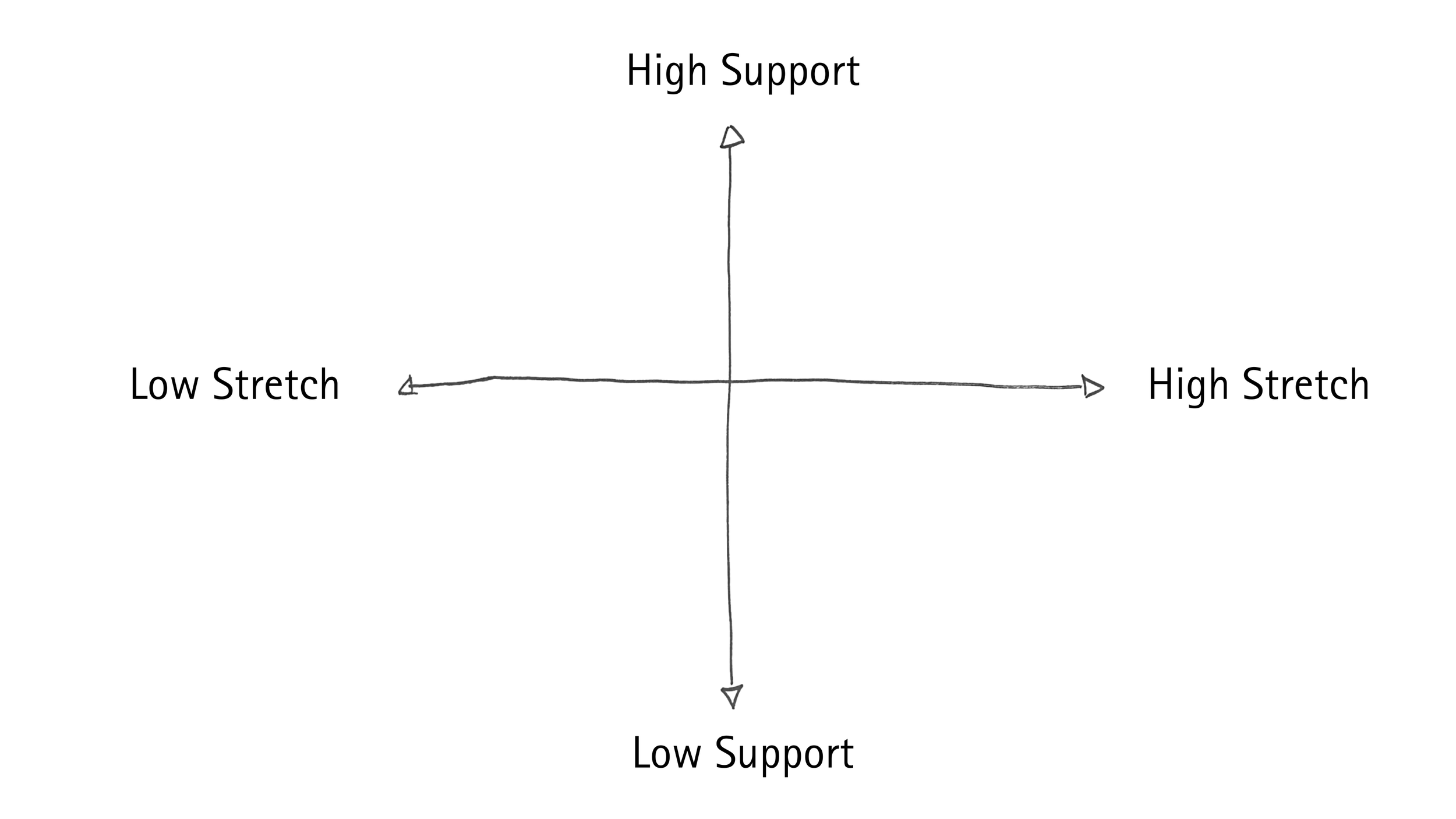
Then, map the following actions based on:
How much you would feel supported in taking that action: “How supported or held do I feel?”
How stretched you would feel in taking that action: “How activating/challenging is this for my nervous system?”
Possible actions:
Signing an online petition
Emailing a representative
Calling a representative
Attending a march or rally (alone vs. with friends)
Attending an organizing meeting (with Indivisible, for example)
Writing get-out-the-vote letters (alone vs. as part of a group)
Talking to a friend about an issue you care about
Volunteering in your community
Sharing something publicly online
After you finishing mapping these, chart a few of your own activist ideas (if you have any pop up.)
Then, consider: what would feel right for you in this moment?
If an action feels like it stretches you too much, what would it look like to increase support? Or if an action feels easy, almost like you're just checking a box, what would need to change to gently stretch you a bit more?
Try it once in the coming weeks and feel for how it lands in you before committing further.
And remember: where something lands on this map isn’t fixed forever! It can (and will) change based on your energy, your season of life, or who is in your communities. So this might be a framework to return to again every few months.
📬 Share this with your people:
